





Summarize with AI

March 6, 2026
5
Min reading
Hydroelectric power plants are true engineering masterpieces that have revolutionized The history of electricity. Even today, hydroelectricity is one of the most important sources of energy in the world.
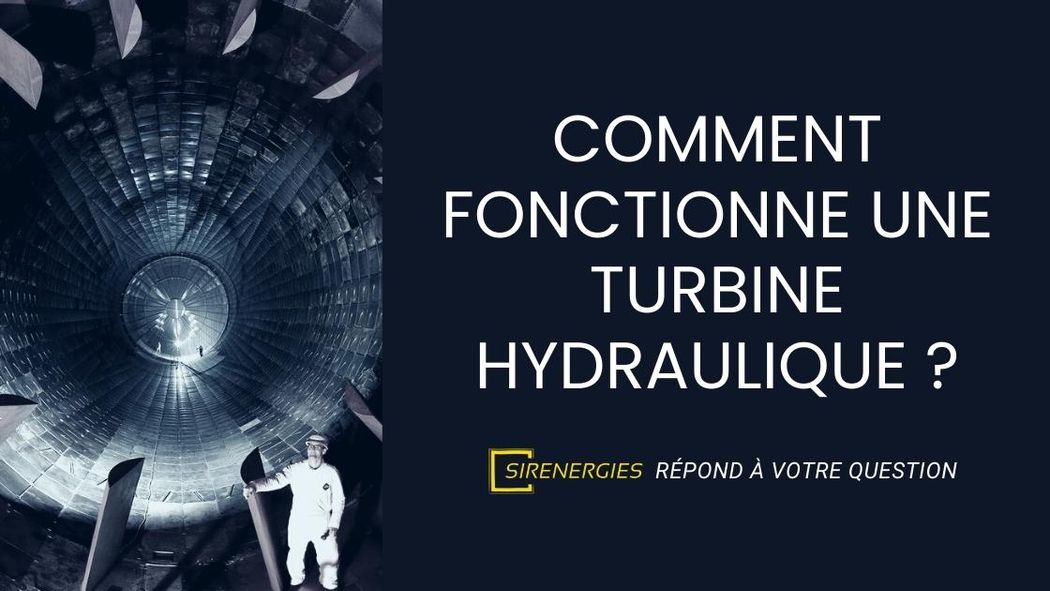
Hydroelectric power plants essentially consist of reservoirs, dams, forced pipes, generators and turbines. Fed by water, it is undoubtedly the main component of hydroelectric power plants. SirEnergies shows you how hydraulic turbines work.
Hydraulic turbines are part of turbomachines and, as a result, they include their three main components :
Evolution of the water wheel, they are machines whose role is to transform the kinetic energy of water into mechanical energy.
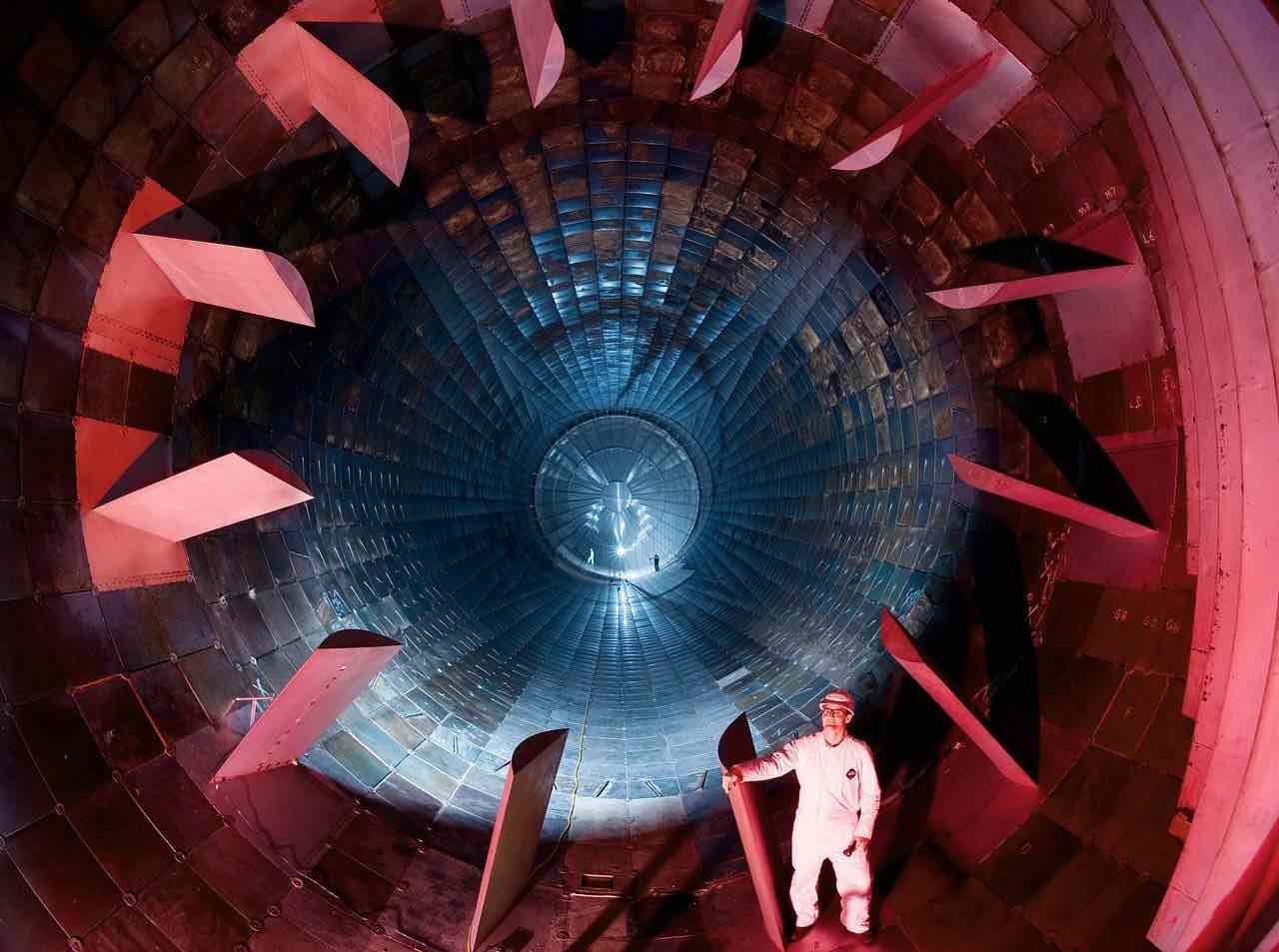
Gravitational potential energy is first converted to kinetic energy. Flowing water is accelerated to a maximum speed within a dispenser.
This makes it possible to operate the rotor of a generator, which in turn is responsible for transforming the stored mechanical energy into electrical energy. Turbines are generally custom-made for each power plant, which ensures maximum efficiency.
The wheel is undoubtedly the main part of the hydraulic turbine. It is it that rotates under the impulse of the force of the moving water. Depending on the water flow and the height of the fall, different hydraulic turbines can be distinguished.
Two main models of hydraulic turbines are most often distinguished: the action turbine and the reaction turbine. In an action turbine, the total potential energy is transformed into kinetic energy in the fixed distributor. No pressure drop is observed between the inlet and the outlet of the wheel. More specifically, the exchange of energy takes place under atmospheric pressure.
Likewise, these turbines do not include a diffuser unlike reaction turbines. This element makes it possible to recover part of the kinetic energy at the exit of the wheel and the height that exists between it and the downstream level of the dam. The diffuser creates a vacuum at the outlet of the rotor, which is why it is also called a vacuum cleaner or suction pipe.
In the case of the reaction turbine, the potential energy is partially converted in the distributor and in the rotor. In the latter, we observe A pressure differential between the entrance and the exit. The ensuing flow is then diverted and accelerated in the rotor.
All the turbines widely used in power plants are action or reaction models. This is particularly the case with the Pelton turbine, the Francis turbine, the Kaplan turbine and the Crossflow turbine.
Pelton turbines are generally used in high-fall power plants (from 130 to 2,000 meters) and low flow power plants. They are well indicated in the case of high mountain dams. The Pelton turbine is an action machine whose axis can be horizontal or vertical. This type of turbine is composed of a moving wheel and a distributor made up of injectors that vary from 1 to 6.
Injectors are converging nozzles that transform Hydraulic power of pressure into kinetic energy. Arranged around the wheel, they emit A jet at atmospheric pressure which is directed towards the middle of the troughs. By varying the output of the needles, it is possible to regulate the flow and to adjust the diameter of the jet.
In a Pelton turbine, the wheel rotates at atmospheric pressure. However, as it passes through it, the water is diverted by almost 180°, which allows it to give up all its kinetic energy. This explains why this type of turbine does not have a diffuser. The presence of a housing is generally sufficient to recover and channel water.
Francis turbines are very suitable for fall heights (40 to 730 meters) and average flow rates. They are frequently found in waterside power plants. It's abouta radial type reaction turbine whose axis is vertical.
Its dispenser is wound around the turbine. Water enters from all around its periphery. As for its output, it takes place axially in the diffuser.
The Francis turbine is undoubtedly one of the oldest turbine models and also one of the most widespread. It is found in several possible configurations (horizontal in mini-hydro, in vertical axis). Very robust and effective, it sinks about 2 m below the downstream level. In some cases, the wheel may be located above the latter.
This type of turbine is very common on falls of low height (5 to 80 m) and with a high flow rate. La Kaplan turbine is an axial-type reaction model. Its axis is vertical and one of its particularities is that it offers the possibility of adjusting the angle of inclination of the blades, which makes it possible to adapt the flow that passes through the turbine to that of the river.
Kaplan turbines are fairly common machines. Their sinking of about 5 m below the downstream level is rather moderate. In addition, the pitch of its blades is adjustable, which means that the efficiency of this turbine is not subject to variations.
One of the variants of the Kaplan turbine is The Bulbe turbine. It is in fact a Kaplan device with a horizontal axis. It was designed for installations with a low fall over the water. Their structure resembles that of a submarine.
The bulb is also characterized by a rather significant depression of the wheel compared to naval level (approximately 10 m).
The Banki-Mitchell or Crossflow turbine is a turbine in which water is injected into a cylindrical rotor with a horizontal axis that passes through a rectangular convergent. The flow in this type of turbine is diverted in contact with the peripheral blades. The rotor has about thirty curved blades that are fixed and parallel to the axis of rotation.
One of the great strengths of this turbine is its simplicity. In fact, it has only three moving parts: the rotor and the two flow control flaps. However, it most often requires major earthworks.
To go further, do not hesitate to consult:
In a few clicks, organize an exchange with one of our experts.


weekly newsletter subscribers

4.9

.png)

The industry is concerned by TICFE, TICGN and other contributions that may represent an important part of invoices. Sirenergies identifies cases of exemption and accompanies the procedures to benefit from them.
Le transport (RTE) correspond aux "autoroutes" de l’électricité. Il s’agit de transporter de très grandes quantités d'énergie sur de longues distances, depuis les centrales de production (nucléaires, barrages, parcs éoliens offshore) vers les régions de consommation.
La distribution (Enedis) s'apparente aux "routes départementales" et aux rues. Elle récupère l'électricité à la sortie du réseau de transport pour la livrer directement chez le client final, en abaissant la tension pour qu'elle soit utilisable par vos appareils.
The range E @sy is available in four pricing structures to adapt to each risk profile:
Tertiary companies are concerned by taxes such as TICFE or TICGN. Sirenergies checks the accuracy of invoices, identifies possible exemptions, and helps correct errors to sustainably reduce costs.
Some businesses may obtain a partial or total exemption from the TICFE or the TICGN, depending on their activity and energy intensity. The support of an expert makes it possible to identify the eligibility criteria and to put together the file.
C'est le levier le plus rapide pour obtenir des résultats visibles. L'éclairage représente environ 40 % de la consommation d'électricité d'une commune.
Passer au LED avec pilotage intelligent permet de réduire la facture de 50 à 80 %, avec un retour sur investissement (ROI) rapide, souvent estimé à 2 ou 3 ans.
One invoice consists of several elements: consumption, supplier share, taxes and contributions. The analysis of each line makes it possible to identify possible errors and to check the consistency with the signed contract.
These are signals sent by RTE during periods of tension on the electrical network. The Sirenergies tool informs you in real time to anticipate your uses.
Le dispositif ARENH a laissé place au VNU (Versement Nucléaire Universel).
Ce changement structurel expose davantage les entreprises aux prix de gros, rendant la gestion des risques plus complexe qu'auparavant.
Il devient alors indispensable de définir une stratégie d'achat d'électricité avec Sirenergies pour lisser l'impact de la volatilité des marchés sur votre budget.
Parce que la puissance souscrite en kVA détermine le prix de l'abonnement et que tout dépassement peut entraîner des surcoûts importants.
Le kVA mesure la capacité maximale que votre compteur peut supporter à un instant T, tandis que le kWh mesure la quantité d'énergie consommée sur une durée.
Un appel d’offres permet de mettre en concurrence plusieurs fournisseurs d’électricité et de gaz afin d’obtenir des conditions contractuelles optimisées. C’est une démarche transparente qui permet de choisir l’offre la plus adaptée aux besoins budgétaires et techniques de l’organisation.
Sourcing consists in identifying and analysing the offers of several electricity and gas suppliers. This approach makes it possible to obtain contracts adapted to the consumption profile and budgetary constraints of the company.
Le processus repose sur l'utilisation de la force de l'eau (énergie cinétique) issue des courants, des chutes d'eau ou des dénivelés. Le fonctionnement suit trois étapes clés :
Among the taxes include TICFE, TICGN, CTA, CJA and TURPE. They represent a significant part of the bill and vary according to consumption profiles. Understanding them well is essential to optimize costs.
Les caves coopératives de taille ETI ou grande entreprise peuvent être soumises à l'audit énergétique réglementaire (norme NF EN 16247). Sirenergies n'a ni la compétence ni l'accréditation pour réaliser cet audit : nous vous orientons vers un bureau d'études partenaire accrédité, et vous accompagnons en amont sur vos achats et en aval sur le pilotage.
Yes. The supplier guarantees an offer 100% renewable via the official Guarantees of Origin (GO) mechanism.
For the most demanding companies, the offer GREENVOLT+ ensures very low carbon intensity electricity, sourced exclusively from independent French producers (hydraulic, wind, solar).
Farms are subject to taxes such as TICFE or TICGN. Sirenergies verifies their application, identifies cases of exemption and accompanies the procedures to reduce the tax burden.
This makes it possible to choose the right time to contract, secure your budgets and anticipate increases.
In 2025, the supplier had a NPS (Net Promoter Score) of +16 and a note of 4,17/5.
Satisfaction is based on a “zero solicitation” model and 100% in-house customer service in Toulon, guaranteeing proximity and responsiveness that cannot be found with major historical suppliers.
Communities are subject to taxes such as TICFE or TICGN. Sirenergies analyzes invoices, identifies exemption possibilities and fixes possible errors to reduce the tax burden.
En 2025, la France a atteint un solde exportateur net de 92,3 TWh, battant le précédent record de 2024 (89 TWh).
Ce record de 92,3 TWh s'explique par la conjonction de trois facteurs :
The €/MWh is a price unit used in wholesale markets, while kWh is the unit visible on your bills.
The subscribed power must be calculated according to the consumption profile and uses (heating, industrial processes, tertiary equipment). One fine analysis makes it possible to ensure the adequacy between real need and contract.
L'abondance de production française tire les prix du marché de gros vers le bas.
En vertu du mécanisme de l'Ordre de Mérite (Merit Order), les centrales les moins coûteuses (nucléaire, renouvelables) couvrent la demande plus souvent, évinçant les centrales à gaz ou charbon plus onéreuses.
Cela multiplie les épisodes de prix bas, voire négatifs, sur le marché spot.
Oui, elle est considérée comme une énergie renouvelable à faibles émissions de gaz à effet de serre.
De plus, l'eau ne subit aucune transformation chimique durant le cycle de production et réintègre son milieu naturel en aval.
Cependant, la construction de barrages nécessite des mesures pour protéger les écosystèmes (débit minimum, passes à poissons).
Tertiary companies must manage their energy costs while guaranteeing the comfort of users (offices, shops, services). Consumption is often linked to heating, air conditioning and lighting, which requires precise monitoring to avoid budgetary excesses.
Exceeding capacity leads to financial penalties and can impact the size of the contract. Adjust the correctly subscribed power makes it possible to avoid these additional costs.
C'est l'indicateur d'efficacité d'un appareil électrique ; il représente le ratio entre la puissance active (utile) et la puissance apparente (totale).