




Summarize with AI

March 6, 2026
7
Min reading
The supply of natural gas is a strategic issue for governments and businesses. In 2023, this energy source represented 18% of final consumption in France. It is also the main form of energy used by industry. In a context of political tensions, economic uncertainty, price volatility, declining reserves and energy transition, countries must adapt to ensure their energy security.
What is the status of natural gas supply in France and around the world?
What strategies are in place to limit risks and anticipate the future?
What are the prospects for gas supply in the short and medium term?
Panorama.
Since 2020, the consumption of natural gas In France follows a downward curve. In 2023, it reached an all-time low with 417 TWh consumed, all sectors combined. This decline was confirmed in 2024. In the second half of the year, the transmission system operator GRTgaz noted a 24.1% decrease in national consumption compared to 2018/2019.
This decrease is explained by rising energy prices, the reduction in the use of gas-fired power plants and environmental awareness.
No risk does not seem to be affecting France's natural gas supply today. Demand is being met thanks to sustained imports, good management of gas stocks and energy efficiency.
La early diversification strategy supplies And theimport of liquefied natural gas (LNG) protect France against geopolitical hazards. It can count on its numerous suppliers, led by Norway and the United States, led by Norway and the United States, followed by Russia, Algeria, Qatar, the Netherlands and Nigeria.
France is also banking on the gradual growth in its domestic production of biomethane low-carbon (9 TWh in 2023).
Graph of total consumption (excluding losses) of natural gas by sector
Did you know
The energy consulting firm Sirenergies assists you in choosing your energy supply.
Thanks to our experts, secure your resources and reduce your costs. Consult our offers
Global consumption of natural gas keeps increasing. According to initial estimates by the International Energy Agency (IEA), the Increase will be 2.5% in 2024, mainly driven by the Asia-Pacific region.
The United States, Russia and China remain the main consuming countries. But it is the Middle East that has the highest consumption of natural gas, in relation to its population. Europe is turning the tide with an 18% drop in gas consumption between 2022 and 2024.
Two countries dominate natural gas production in the world: the United States and Russia, followed by Iran, China, and Canada. In Europe, Norway beat its gas production record in 2024. In 2023, The production of 4,059 billion m³ was able to respond safely to the request worldwide estimated at 4,010 m³.
The global gas supply therefore seems to be guaranteed. It is nevertheless destabilized by geopolitical tensions, in particular the conflict in Ukraine. But the reduction in imports of Russian gas by pipeline has been offset by the rise of Liquefied Natural Gas (LNG), which has been booming since 2022. The condensation of gas in liquid form facilitates its storage and transport by sea.
Ranking of the ten largest natural gas producing countries in 2023
Despite their pronounced decrease compared to 2023, natural gas prices have experienced a gradual increase over 2024.
However, the time seems to be price stabilization. Analysts' forecasts for 2025 are optimistic, although caution is still required, given global geopolitical and economic unpredictability.
The European Union, and in particular France, plays the card of diversification. It is one of the panels of the RepowerEU map announced in 2022 following the war in Ukraine. The objective? Free European countries from their dependence on Russian natural gas. The share of imports from Russia thus fell from 45% before the war to 13.3% in 2024 to favour new countries (Norway, Algeria, Azerbaijan, Azerbaijan, United Kingdom, Libya). However, some European countries remain linked to Russia by binding long-term contracts (Hungary, Slovakia, etc.)
Since 2022, the European strategy has focused on liquefied natural gas (LNG). American exports to Europe doubled between 2021 and 2022. 2024 was marked by the rise in imports of Russian gas by sea in the form of LNG.
Graph on the origin of gas imports:
Energy savings also play a major role in energy security. Reduced demand is more easily covered by the supply of alternative and renewable energies.
In 2022, Europe thus voluntarily decided to reduce its natural gas consumption by 15% in order to anticipate a possible total cessation of Russian gas supplies. Taken for strategic and political reasons, this decision also contributed to the reduction of CO2 emissions European.
The European Union is betting on renewable energies to reduce its greenhouse gas emissions and secure its energy supply. In 2023, renewable energies represented 24.5% of the European energy mix, with the objective of reaching 42.5% by 2030. In France, their share in gross final consumption reached 22.2% in 2023.
More generally, The transition to green energies is accelerating in the world. In 2023, more than 560 GW of renewable energy capacity was installed, 60% of which was installed by China. According to the IEA, the world could go from 4,250 GW of renewable production in 2023 to 10,000 GW in 2030. However, one question remains: the capacity of energy networks to integrate this alternative electricity and gas production.
💡 Need a tailor-made energy strategy allowing you to face current challenges?
Call on Sirenergies to reduce your risks, your costs and guarantee your competitiveness. Contact us
The development of renewables, and in particular renewable and decarbonized gases, requires the modernization of transport, distribution and storage infrastructures. What's at stake? Allow theinjecting new green gas into networks (biomethane, hydrogen) and guarantee secure and flexible delivery to consumers.
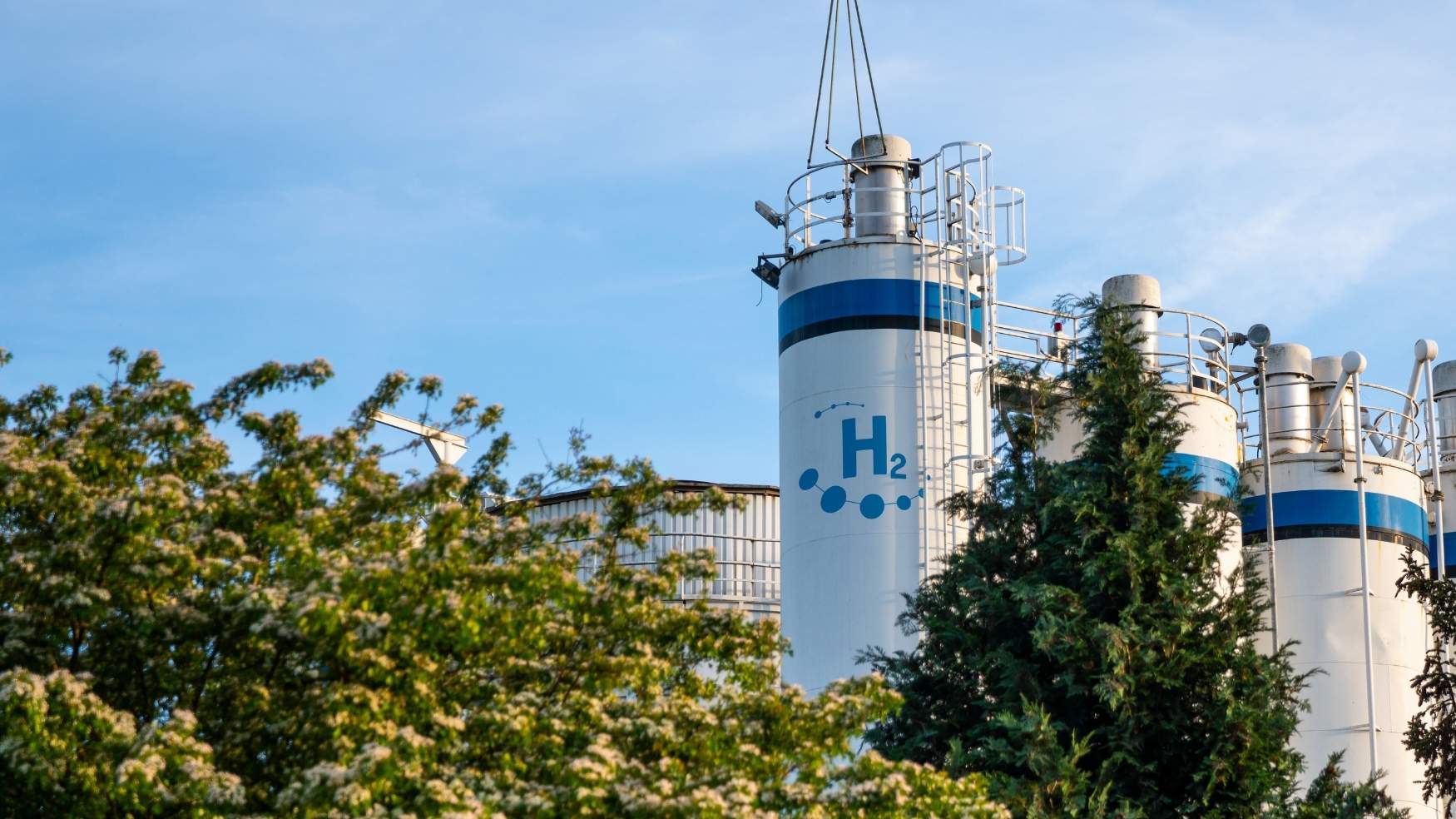
For example, biomethane involves the multiplication of injection points and the creation of reverse sites to redirect production from the distribution network to the transport network. Hydrogen requires a network of territories through adapted, reliable and efficient infrastructures.
If the supply of natural gas seems reassuring in 2024, the IEA warns in its annual report published in October on “the fragile balance” of the global gas market in the short term. Les geopolitical tensions, dominated by the conflict in Ukraine, threaten supplies and increase price volatility.
In Europe, the End of the Russian gas transit contract via Ukraine could mean 15 billion m³ less gas for European countries in 2025. As part of new sanctions, the European Union has also banned Russia from using its ports to transport Russian liquefied natural gas (LNG) to destinations outside Europe.
Around the world, the Middle East conflict worried. Impacts on the Strait of Hormuz could destabilize global oil and LNG supplies.
Another area of concern: the Future American energy policy following the election of Donald Trump, a fervent defender of fossil fuels and shale gas.
On the energy markets side, Uncertainties hang over the evolution of natural gas demand and the adequacy of the offer. Global consumption could change in the years to come in a context of energy transition and the development of renewable energies.
An imbalance between the supply and demand of natural gas could destabilizing markets and economies. The IEA expects an excess of LNG supply in the second half of the decade and downward pressure on prices. Already in 2024, American exports of liquefied natural gas suffered from the fall in European demand and the rise of competing countries (Qatar, Australia).
The decline in reserves seems to be jeopardizing the future of natural gas. At the current rate, natural stocks can cover 50 years of consumption. However, technological innovation could extend these deadlines thanks toexploitation of so-called “unconventional” gas reserves or more difficult to access (shale gas, offshore reserves).
But the future of gas should be based mainly on renewable and low-carbon gas, with the development of promising production technologies (pyrogasification, hydrothermal gasification, power-to-gas, methanation) and the acceleration of the production of biomethane. In France, the transition to green gas is under way. The objective is ambitious: it is to have a 100% renewable and decarbonized gas mix by 2050 in order to achieve carbon neutrality.
To conclude...
The supply of natural gas now seems secure in France, Europe and the world. However, geopolitical, economic and environmental uncertainties are weighing on its future. Between technological promises, environmental challenges and economic risks, only proactive and resilient strategies can guarantee a secure, reliable and affordable gas supply, while anticipating alternative energy solutions.
In a few clicks, organize an exchange with one of our experts.


weekly newsletter subscribers

4.9

.png)

Chaque modèle d'IA répond à un besoin spécifique du cycle d'achat :
L'expertise humaine reste néanmoins indispensable.
Ce seuil est jugé élevé par rapport aux prévisions actuelles du marché. Si le prix de l'électricité reste en dessous de 78 €/MWh, les entreprises ne bénéficieront d'aucune redistribution. Cela signifie que la protection promise par la réforme pourrait être inexistante dans un marché baissier, d'où l'importance de stratégies de sourcing agiles et d'outils de monitoring comme Pilott.
La fin de l'ARENH (Accès Régulé à l'Électricité Nucléaire Historique) marque l'arrêt de la fourniture d'électricité à prix fixe garanti (42 €/MWh).
Dès le 1er janvier 2026, les entreprises sont exposées aux prix de marché, mais deux nouveaux mécanismes de régulation prennent le relais, bien que leur logique soit différente :
Conseil stratégique : Ne comptez pas sur le VNU pour réduire votre facture en 2026 si les marchés restent stables. Auditez vos contrats dès maintenant pour intégrer une part de prix fixe ou explorer des "Power Purchase Agreements" (PPA) pour sécuriser vos coûts sur le long terme.
La Vente de Nucléaire Universelle (VNU) est le nouveau mécanisme de régulation des prix de l'électricité en France. Contrairement à l'ARENH, il ne s'agit plus d'un volume fixe à prix réduit, mais d'une redistribution financière des revenus excédentaires d'EDF aux consommateurs, basée sur les prix de marché et les coûts de production du nucléaire historique.
The central objective of PPE 3 is to engage France towards carbon neutrality by 2050 by breaking the country's historical dependence on fossil fuels.
Today, approximately 60% of final energy consumption in France still relies on imported oil and natural gas. PPE 3 aims to radically reverse this trend by setting an ambitious target: to reach 60% of carbon-free energies in final consumption by 2030.
To achieve this, PPE 3 pursues three major sub-objectives:
Absolument. La réforme des heures creuses vise à absorber la surproduction solaire en milieu de journée. Les créneaux d'heures creuses se déplacent progressivement vers la plage 11h00 – 17h00, notamment en été. C'est une opportunité majeure pour les sites industriels ou tertiaires capables de flexibilité.
Conseil stratégique :
In 2025, the supplier had a NPS (Net Promoter Score) of +16 and a note of 4,17/5.
Satisfaction is based on a “zero solicitation” model and 100% in-house customer service in Toulon, guaranteeing proximity and responsiveness that cannot be found with major historical suppliers.
L'impact dépendra des prix de marché. Le mécanisme prévoit une redistribution si les prix dépassent 78 €/MWh. Cependant, si les cours restent bas (actuellement autour de 60 €/MWh), le dispositif ne s'activera pas. La facture sera alors indexée à 100% sur les prix de marché, rendant le choix du fournisseur et du moment d'achat critiques.
L'augmentation s'explique par la revalorisation de l'Accise sur le gaz à 16,39 €/MWh et la hausse de 3,41 % du tarif de transport (ATRT 8).
S'y ajoute l'entrée en vigueur des Certificats de Production de Biogaz (CPB), un nouveau coût réglementaire pour soutenir le biométhane.
Face à ces évolutions, Sirenergies vous accompagne dans l'achat de gaz naturel pour sécuriser vos prix malgré la volatilité du marché.
La Multiannual Energy Programming (PPE) is the strategic management tool for France's energy policy. Established by the 2015 law on energy transition for green growth (LTECV), it serves as a compass for the State, communities and businesses.
Concretely, the PPE sets the priorities for action of the public authorities for the management of all forms of energy on the national territory. It covers a period of ten years, divided into two periods of five years, and must be revised periodically to adapt to technological and economic developments.
It deals with major topics such as:
It is crucial not to confuse it with National Low Carbon Strategy (SNBC). While SNBC sets carbon budgets (the ceilings for greenhouse gas emissions by sector), the PPE determines the technical and energy resources to achieve them.
Instauré en 2017, ce dispositif répond à un enjeu de sécurité nationale.
L'électricité ne se stockant pas à grande échelle, le réseau doit être capable de répondre instantanément à la demande, même lors des pics de froid hivernaux. Le mécanisme incite financièrement les producteurs à maintenir leurs centrales disponibles et les entreprises à réduire leur consommation (effacement) lors de ces périodes critiques.
Le prix Forward est fixé à l'avance (sécurité budgétaire), tandis que le prix Spot varie heure par heure selon le marché (opportunité mais risque élevé).
The range E @sy is available in four pricing structures to adapt to each risk profile:
Car les marchés dépendent de facteurs exogènes imprévisibles (géopolitique, météo soudaine, politique) que les modèles basés sur l'historique ne peuvent pas anticiper, tout comme on ne prédit pas le Loto.
Non. L'IA traite la donnée (data processing), mais l'analyste apporte la compréhension du contexte (market sentiment) et la prise de décision stratégique.