





Summarize with AI

March 6, 2026
4
Min reading
After several consultations between French thinkers, The Climate and Resilience Law was voted on and published in Official Journal of August 24, 2021. It addresses some of the 146 proposals of the Citizens' Climate Convention, with the aim of social justice. What is it about? What should we remember?
The Climate and Resilience Law was made effective on August 22, 2021 after numerous debates. Indeed, this law comes from proposals made during the Citizens' Climate Convention (CCC). Devoted by the Council of Ministers in February 2021 and then passed by the Constitutional Council on August 14, this law focuses on the fight against climate change and the strengthening of resilience in the face of its effects.
It revolves around five themes : consume, produce and work, travel, housing and food. The purpose of this law is also to strengthen sanctions in case of environmental damage. This Climate and Resilience bill indeed contains more than 300 articles resulting from its vote by Parliament.
At the end of the parliamentary debate, it emerged that the State must commit itself to respecting the European objective. The latter is from reduce greenhouse gas emissions by 2030 (GHG) by about 55%. In addition, there is a system for monitoring the effects of the law on an ongoing basis. This was also mentioned during COP26.
With more than a hundred decrees, this law is intended to be a decisive turning point in the context of reducing CO2. The most affected areas are construction, real estate and energy. The evaluation of the implementation of these greenhouse gas reduction measures has been entrusted to the High Council for Climate.
The law of August 22, 2021, or the Climate and Resilience Law, was voted for many reasons.
This environmental label makes it possible to raise awareness about the impacts of our poor consumption habits. This focuses on our climate in particular and on our products and services in general. Several measures will come into force over the next few years.
In 2022, advertising on fossil fuels Will be prohibited. Likewise, the first environmental displays will be dedicated to advertising cars and household appliances.
In 2023, university and state canteens offering several menus will be required to offer a vegetarian dish daily. In 2028, thanks to the senators' amendment, advertising on polluting cars will be banned. By 2030, large and medium-sized retailers will finally have to devote at least 20% of their territories in order to allow the development of bulk sales.
Some decrees of the Climate and Resilience Law also deal with recycling. Indeed, reuse and reuse play a key role in the process.

The economy is increasingly going green. To maintain this momentum, strategies are being implemented to Lower CO levels2 and establish biodiversity. Our public contracts and orders will now have to meet certain criteria for a good ecological transition. Likewise, employees will also have the opportunity to discuss their company's environmental strategy.
Some provisions of the mining code have also been amended in order to protect the ecosystem. The promotion of carbon-free energy is now supervised:
Measures have also been taken to support hydroelectricity, biogas And hydrogen. At the level of municipalities, the installation of wind turbines is reinforced. A decree allowing the protection of waters and forests has also been put in place.
The Climate and Resilience Law also reinforces the provisions of the law of 24 December 2019 relating to the orientation of mobility. The measures taken include the creation by 2024 of 33 new low emission zones (LEZs) in agglomerations with more than 150,000 inhabitants. The law also defines that regions are now required to offer attractive regional train fares.
With this law, domestic flights are finally prohibited if there is an alternative train in less than 2 hours and a half. In addition, as of 2022, carbon offsetting previous flights will be mandatory for companies.
The Climate and Resilience Law allows public services and society as a whole to enter the ecological era. It mainly affects several sectors.
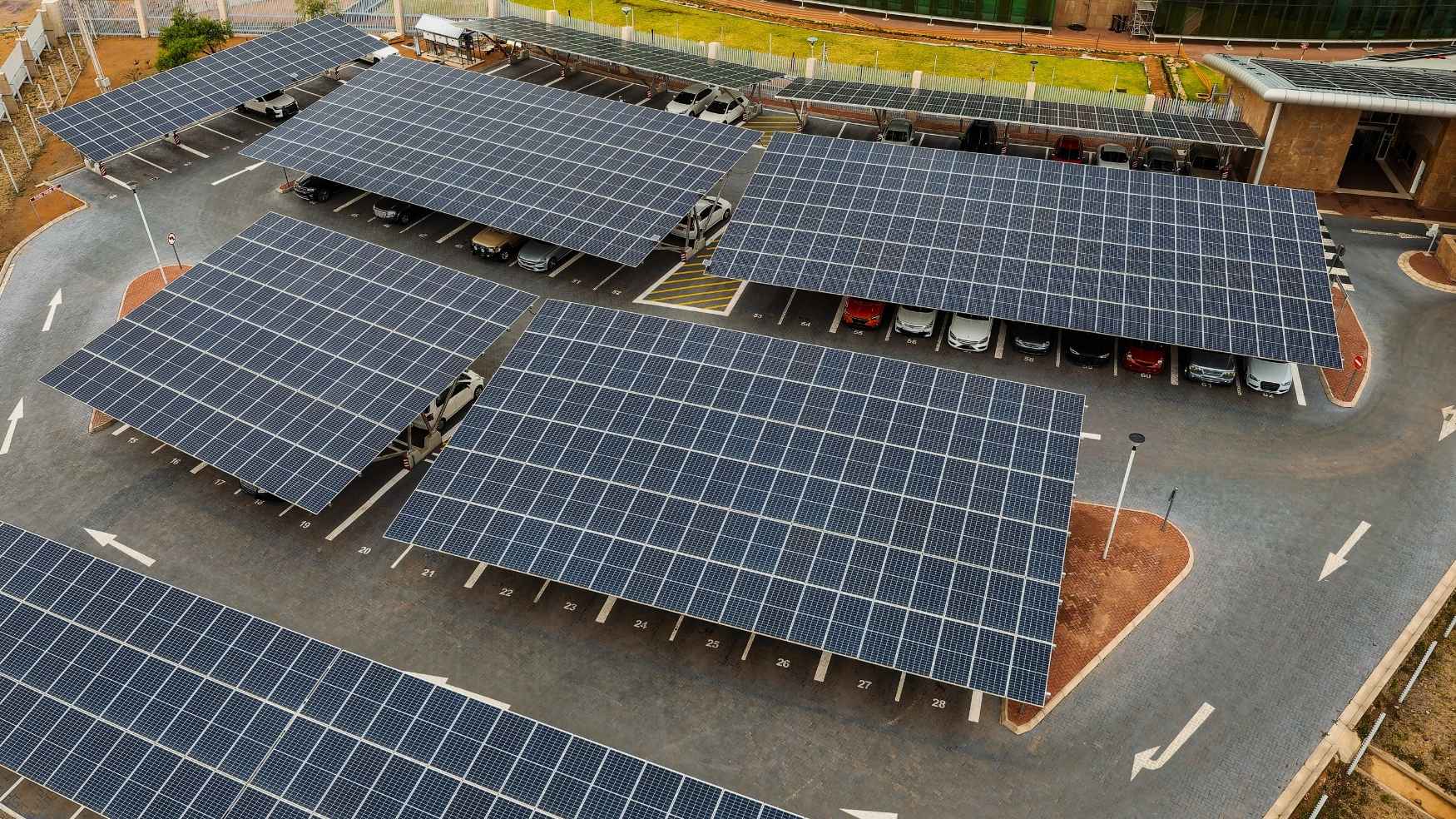
The law states that any natural gas supplier must incorporate biogas into its products. New commercial buildings of more than 500 m² must also vegetate or solarize 30% of their surfaces. This measure will be effective from 1Er January 2023. Around 50% of car parks over 500 m² must also be planted.
By 2050, we must reach “zero net artificialization”, a goal that concerns all local authorities. Commercial areas that require concreting will finally be banned.
Offences involving the threat to the environment are punishable. Those found guilty of having exposed the environment in any way incur a fine of 250,000 euros. In addition, there is a sentence of 3 years in prison. In the event of a more serious offence (ecocide), the penalties incurred are a maximum of 10 years in prison with a fine of 4.5 million euros for natural persons.
Entered into force last August after long discussions in the Council of Ministers, the Climate and Resilience Law is therefore intended to help us better protect our environment and reduce the carbon index (source: Legifrance).
In a few clicks, organize an exchange with one of our experts.


weekly newsletter subscribers

4.9

.png)

La réussite d'un projet collectif énergie repose sur trois piliers fondamentaux :
Les coopératives de taille ETI ou grande entreprise peuvent être soumises à l'audit énergétique réglementaire (norme NF EN 16247). Sirenergies n'a ni la compétence ni l'accréditation pour réaliser cet audit : nous vous orientons vers un bureau d'études partenaire accrédité, et vous accompagnons en amont sur vos achats et en aval sur le pilotage.
Le calendrier 2026 impose deux échéances majeures :
Pour simplifier ces démarches, vous pouvez centraliser vos données de consommation avec la plateforme Pilott de Sirenergies, garantissant ainsi la conformité de vos rapports réglementaires.
To calculate Scope 2 emissions, use the following formula:
Energy quantity (kWh) × Emission factor (kg CO₂ e/kWh).
Use databases like ADEME for precision.
Yes. The supplier guarantees an offer 100% renewable via the official Guarantees of Origin (GO) mechanism.
For the most demanding companies, the offer GREENVOLT+ ensures very low carbon intensity electricity, sourced exclusively from independent French producers (hydraulic, wind, solar).
It allows you to prove your commitment to the energy transition and to meet regulatory requirements.