




Summarize with AI

March 6, 2026
8
Min reading
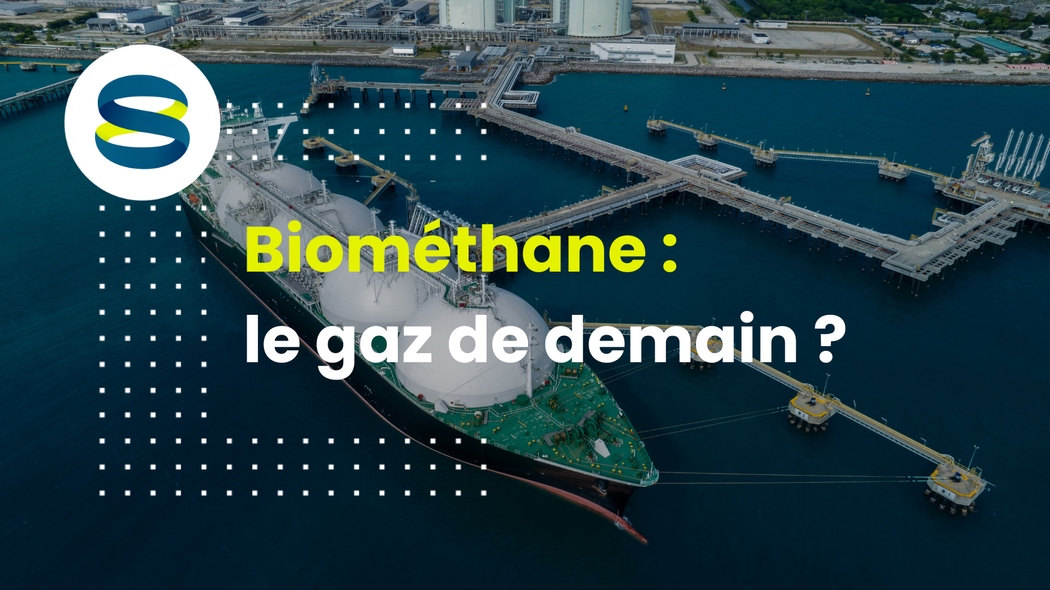
Its principles have been known since the middle of the 19th century.E century. However, it was not until 2009 that biogas — and its cousin biomethane — were officially recognized as renewable energy sources of natural origin by Europe.
Since then, biomethane has continued to progress, establishing itself as a sustainable and credible energy alternative to natural gas of fossil origin.
Produced from organic waste, this green and renewable gas offers a concrete solution for energy transition and decarbonization.
What is biomethane? How is its use democratized in France and in the world?
Between future perspectives and obstacles to its development, SirEnergies sheds light on this energy source that could well be one of the pillars of a sustainable energy future.
Biomethane is a green, carbon-free gas resulting from the methanization process. Very similar to natural gas in terms of its methane content and energy density, it stands out as a 100% renewable alternative energy source very promising.
Methanization consists of produce energy from biomass and organic waste (agricultural effluents, food residues, sewage sludge, etc.).
Placed in a digester, organic matter is degraded by microorganisms. Ce natural fermentation process, made in the absence of oxygen, generates biogas.
Biogas is a raw gas, composed of ~ 60% methane (CH4) but also ~ 40% of carbon dioxide (CO₂) and other chemical compounds (water, hydrogen sulphide, ammonia). Once refined, the Biogas gives birth to biomethane, a gas with a very high methane content (~ 98%) and with properties very similar to natural gas.
Biomethane is an energy resource 100% renewable and versatile. Purified, this green and carbon-free gas can be used under the same conditions as natural gas. Son direct injection in transport and distribution networks makes it possible to supply end consumers and to cover their energy needs (heating, domestic hot water, cooking, industrial uses, etc.).
Biomethane is also used in cogeneration to produce electricity and/or heat.
But one of the most promising uses of biomethane lies in decarbonization of the transport sector. Biomethane belongs to the biofuel family. Thanks to its quality similar to natural gas, it can power vehicles running on Natural Gas for Vehicles (CNG), in particular buses, trucks or dumpsters. While its use is still confidential, this cleaner fuel contributes to the transition to greener mobility, with reduced CO₂ and fine particle emissions.
In a context of energy transition, biomethane is attracting all eyes. It combines the advantages: low environmental impact, flexibility, predictability and virtuous valorization of waste and biomass.
Every energy production process emits greenhouse gases. Methanization is no exception. However, the carbon balance of biomethane is largely in its favor. According to GRDF, it is ten times lower than that of fossil natural gas. According to the Carbone 4 firm, replace the natural gas by biomethane reduced by approximately 80% GHG emissions across the value chain.
Ce Balance close to carbon neutrality is explained by a compensation effect : the quantity of CO₂ emitted by methanization is offset by the CO₂ captured by plants throughout their lives. Methanization also prevents the highly polluting degradation of waste in the open air and methane emissions, a GHG with a GWP ~225× higher to that of CO₂.
💡Did you know that?
You want improve your company's carbon footprint ? What if you switched to biomethane?
Energy suppliers offer green offers with guarantees of origin (GO).
The Connected Consulting Firm, SirEnergies accompanies you for check and compare offers of green gas and guide you towards the most suitable solution ecological and Competitive. We call you back
With methanization, waste is transformed into a local resource. Biogas and biomethane production valorizes waste and avoids polluting emissions related to their transport to a landfill, their burial or their incineration.
Generated from local waste (agriculture, communities, wastewater treatment plants, industry) and consumed nearby, biomethane contributes to a local circular economy that cannot be relocated.
Biomethane is a predictable and flexible energy source, whose production can be estimated at the beginning according to the volume of inputs. It usefully complements the ENR intermittent (wind, solar).
Easy to store and can be mobilized on demand, it helps to balancing gas supply and demand according to production and consumption peaks.
Derived from local and renewable resources, biomethane contributes to diversification of sources ofenergy supply And at the energy sovereignty territories.
In 2024, nearly 700 installations are injecting biomethane, for a maximum capacity of 12.6 TWh (+5% in one year). More than 900 projects are under study. In 2023, injection represented ~ 2.3% of primary gas consumption. LTECV objective: 10% in 2030.
The RepowerEU plan (2022) aims at 35 Gm³ in 2030. In 2024, the capacity reached ~ 6.4 Gm³ (+37% in two years). Germany remains No. 1, France No. 2, ahead of the United Kingdom, Italy and Denmark. The EBA lists ~950 projects likely to reach ~13 Gm³/year.
In 2023, biomethane still weighs only ~ 0.25% of global gas consumption, but the dynamic is accelerating: >10 Gm³ produced at the end of 2024, ~ 60% in Europe. The United States concentrates ~4 Gm³/year, with plans to 1,000 units in 2030 and 5,000 in 2040. India, Brazil and China are gradually increasing in power.
Still high production cost (~90—100 €/MWh in 2024) vs natural gas (~30—35 €/MWh delivery 2024). Significant CAPEX (typical site: ~4 M€).
Resource constrained and conflicts of use (food, carbon sinks, CIVE, biofuels). The SGPE (2024) anticipates a Biomass deficit in 2030 in France (artificialization, slowed forests).
Difficult connections when the sites are remote, Countdown required, mesh of refueling stations GNV/BioGNV still limited (~350 opened at the end of 2023).
Perceived nuisances (odors, traffic) → need for local consultation, transparency and good operating practices.
To conclude — Biomethane combines environmental, economic and strategic advantages. With constant public/private support and technological innovation, it can become a major driver of decarbonization at the heart of the energy mix.
In a few clicks, organize an exchange with one of our experts.


weekly newsletter subscribers

4.9

.png)

La réussite d'un projet collectif énergie repose sur trois piliers fondamentaux :
Le calendrier 2026 impose deux échéances majeures :
Pour simplifier ces démarches, vous pouvez centraliser vos données de consommation avec la plateforme Pilott de Sirenergies, garantissant ainsi la conformité de vos rapports réglementaires.
Les caves coopératives de taille ETI ou grande entreprise peuvent être soumises à l'audit énergétique réglementaire (norme NF EN 16247). Sirenergies n'a ni la compétence ni l'accréditation pour réaliser cet audit : nous vous orientons vers un bureau d'études partenaire accrédité, et vous accompagnons en amont sur vos achats et en aval sur le pilotage.
Yes. The supplier guarantees an offer 100% renewable via the official Guarantees of Origin (GO) mechanism.
For the most demanding companies, the offer GREENVOLT+ ensures very low carbon intensity electricity, sourced exclusively from independent French producers (hydraulic, wind, solar).
To calculate Scope 2 emissions, use the following formula:
Energy quantity (kWh) × Emission factor (kg CO₂ e/kWh).
Use databases like ADEME for precision.
The range E @sy is available in four pricing structures to adapt to each risk profile:
It allows you to prove your commitment to the energy transition and to meet regulatory requirements.
Les coopératives de taille ETI ou grande entreprise peuvent être soumises à l'audit énergétique réglementaire (norme NF EN 16247). Sirenergies n'a ni la compétence ni l'accréditation pour réaliser cet audit : nous vous orientons vers un bureau d'études partenaire accrédité, et vous accompagnons en amont sur vos achats et en aval sur le pilotage.