

Industrial bakery and pastry: tunnel ovens and baking
Industrial bakers, secure your tunnel ovens
The tunnel oven bakes continuously while, at the end of the line, the blast freezer sets the raw pastries: an industrial bakery buys gas for its burners and electricity for its mixers, proofing, and refrigeration. Sirenergies helps you put your contracts out to tender and calculates your recoverable heat.


Key industry figures
Gas baking, electric refrigeration: what industrial bakeries consume
Industrial baking accounts for a small share of the food industry's energy use, but every ton baked depends on two bills. Recovering heat from ovens and purchasing gas and electricity at the right time directly protects your margins.
Share of the bakery, pastry, and pasta sector in the energy consumed by the food industry.
Share of fuel consumed by industry that is lost as waste heat.
Share of electricity in the energy needs of the French food processing industry.
The energy profile of an industrial bakery
The tunnel oven burns gas, while refrigeration and proofing draw on electricity
The situation: a line that bakes and freezes under the same roof
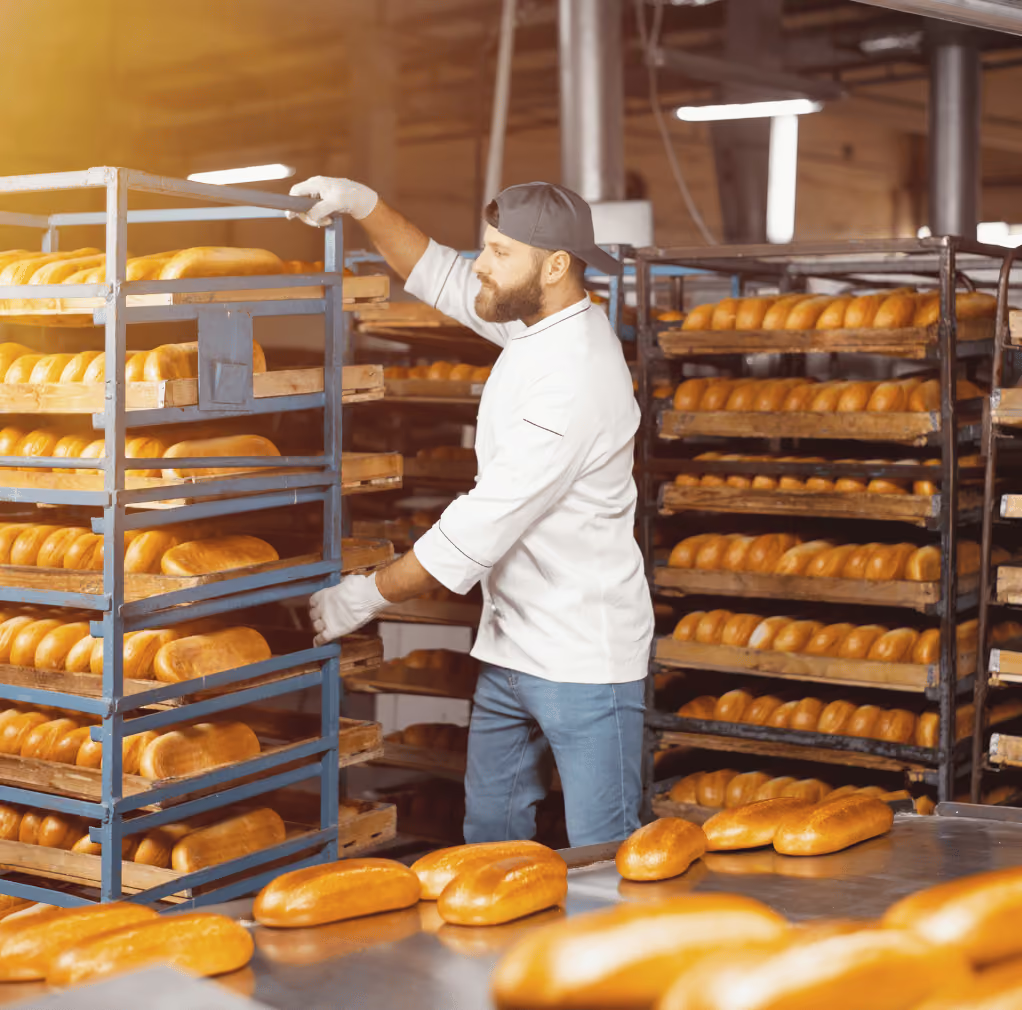
Dough moves from the mixer to the sheeter, then into the proofing chamber, before entering the tunnel oven or heading raw to the blast freezer. Burners usually run on natural gas across two or three shifts; some sites already bake with electricity. Electricity powers the rest: mixers, controlled proofing, spiral freezers, cold storage, and compressed air. Whether fresh bread, par-baked, or frozen raw pastry, the balance between the two energy sources shifts depending on the product range. The bakery, pastry, and pasta sector generated 12.2 billion euros in sales in 2023 (Agreste, GraphAgri 2025).
Our role: treating ovens and refrigeration as a single budget
Oven manufacturers and refrigeration specialists remain your technical contacts; Sirenergies works on your contracts, invoices, and load profiles.
- A joint tender for gas and electricity, with a pricing strategy tailored to each plant.
- Subscribed power levels and daily gas capacity aligned with your production shifts, not with an exceptional peak.
- A budgetary assessment for heat recovery from flue gases or electric baking, before you invest.


Your energy challenges
The 3 energy challenges of tunnel ovens and industrial baking
Burners that track gas prices, oven flue gases vented at high temperatures, and factories where utility bills don't speak the language of production: industrial baking involves three issues that financial departments often discover too late. Here is how Sirenergies tackles them one by one, starting with the contract.
High-consumption multi-energy tunnel oven
Gas or electric tunnel ovens are among the highest energy-consuming equipment in the workshop, requiring the management of two separate contracts simultaneously.
Multi-energy audit and bundled tender
Sirenergies negotiates your gas and electricity contracts together to secure the best price for both energy sources.

Underutilized waste heat
In many facilities, the heat released by tunnel ovens remains insufficiently recovered, even though ADEME supports recovery projects starting from a potential of approximately 1 GWh per year in industrial bread-making.
Guidance on waste heat recovery
Sirenergies guides you toward best practices and the right technical partners to recover this heat, in addition to optimizing your contracts.
Multiple decentralized factories
Industrial bakery groups operating multiple factories often manage their contracts site by site, without a consolidated view of their total consumption.
Centralized management via Pilott
Sirenergies centralizes the monitoring of all your sites on a single platform, with alerts for any deviations.
Contractual and data expertise
Optimizing and managing contracts for your industrial bakeries
From tunnel ovens that bake continuously to blast freezers that set raw pastries, Sirenergies treats your gas and electricity as a single budget. Our recommendations are based on your team schedules and product ranges, because a fresh bread factory and a frozen food plant do not purchase energy the same way.
Contractual and capacity audit
Inventory of your gas and electricity contracts and their expiration dates, monitoring of subscribed power levels and boiler room daily capacity, followed by an annual review of excise duties and energy savings certificates (CEE) applicable to your ovens and refrigeration systems.
Purchasing strategy and competitive bidding
Specifications, supplier pre-selection, and multi-criteria analysis of offers for both energy sources, with a written recommendation: fixed price, market-indexed price, or progressive hedging, depending on your risk tolerance.
Distribution optimization (TURPE / ATRD)
Gas: ATRD tariff options and daily capacity adjusted to the actual consumption of your ovens. Electricity: TURPE options and power levels per period aligned with refrigeration and proofing needs. We handle all procedures with network operators.
Tariff modeling for waste heat
Simulation of the impact on your two utility bills of recovering heat from oven flue gases or switching to electric baking: gas savings, additional electricity, power to be subscribed, and return on investment based on several price scenarios.
Pilott software platform
Meters from all your factories on a single screen: consumption data at D+1, alerts when gas or electricity prices cross your thresholds, projected annual budget, and centralized contracts and invoices.
Expert consulting dedicated to the bakery industry
A dedicated consultant monitors your markets, hedging levels, and deadlines, alerts you to regulatory changes, and works with you to build an energy cost indicator per ton of baked or frozen product.
Our platform
Pilott, simplified management to track your consumption
- Gather meters from all your bakery factories on one interface
- Check the previous day's gas and electricity consumption every day, factory by factory
- Get notified when the price of baking gas or electricity exceeds your thresholds
- Project your energy budget and keep all your contracts in one place


Industrial bakery and pastry
Explore other processes
Un autre secteur ?


Methodology and definitions
What is energy consulting for tunnel ovens and industrial baking?
Energy consulting for tunnel ovens covers three decisions: how to purchase gas for burners and electricity for refrigeration, whether at a fixed price or market-indexed; at what level to pay distribution fees; and what to do with heat from flue gases. For industrial bakeries, Sirenergies consultants clarify these choices and track their impact within the Pilott platform.
A guide on how to buy
In 2024, 59% of industrial facilities consuming less than 2,000 MWh of electricity had a fixed-price contract, compared to 22% for those consuming over 20,000 MWh (Insee Première No. 2095, February 2026).
Three Sirenergies levers
- Arbitrage between fixed prices, indexed prices, and successive fixings, depending on your market exposure.
- Daily ATRD capacity (third-party access to gas distribution networks) and adjusted TURPE power levels (tariffs for using public electricity networks).
- Heat recovery or electric cooking quantified, including CEE (energy savings certificate) sheets.

How much of your gas bill is tied to your tunnel kilns?
A year of invoices and a list of your cooking lines are all it takes to measure the potential savings. No obligation.

