

Market gardening and greenhouses: heated greenhouses
Greenhouse growers, take control of your heating costs
Gas heating, horticultural lighting, irrigation, and cogeneration systems whose legacy contracts are losing profitability: energy optimization for a market garden greenhouse involves both what you buy and what you produce. Sirenergies supports you in gas procurement and the future of your cogeneration.


Key industry figures
Heating gas and cogeneration: key benchmarks for heated greenhouses
A heated greenhouse consumes primarily gas from autumn to spring, and many also produce electricity via cogeneration. This dual flow—purchased on one side and monetized on the other—requires a purchasing strategy built before the heating season.
Rank of energy among expenses for greenhouse tomato producers.
Share of market garden greenhouses heated by natural gas in France.
Share of gas-heated greenhouse areas equipped with cogeneration.
The energy profile of a heated greenhouse operation
Heating gas and cogeneration make up the bulk of the bill
The reality: gas in, electricity out
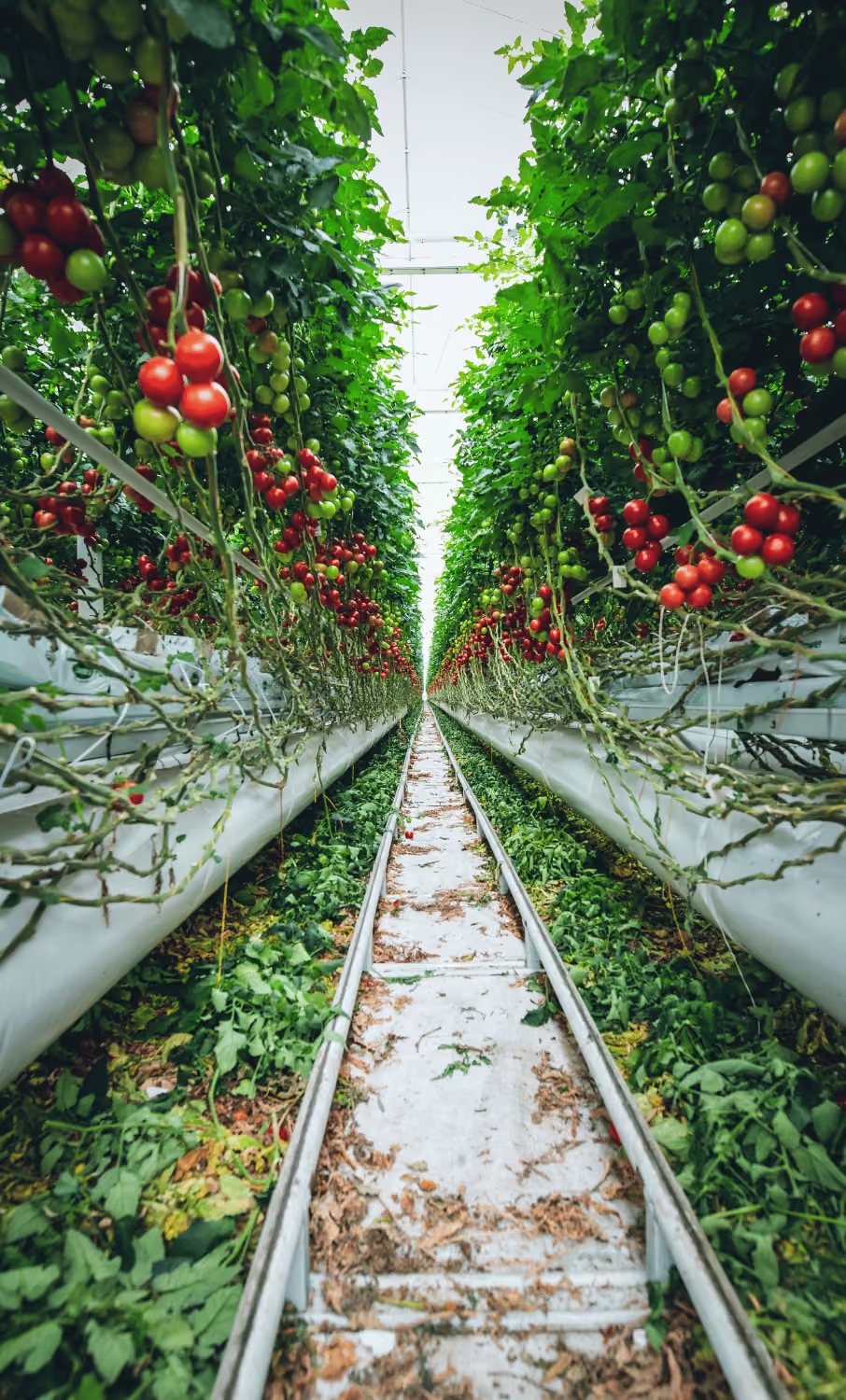
A heated greenhouse primarily consumes gas to maintain crop temperatures from autumn to spring. Many operations have coupled this with cogeneration, which simultaneously produces heat for the greenhouse and electricity sold under EDF OA contracts. Purchased electricity is used for horticultural lighting, irrigation, and auxiliary equipment. France has 1,129 hectares of heated greenhouses (Agreste and CTIFL): a small surface area, but highly energy-intensive.
Our role: securing your input costs and the value of your outputs
Your heating technicians and cogeneration operators maintain control over the installations; Sirenergies advises you on the contracts.
- Gas:competitive bidding for suppliers and advice on when to lock in your prices before the heating season.
- Cogeneration:support in choosing an aggregator or a balance responsible party when your C01, C13, or C16 contracts reach their expiration date.
- Electricity:TURPE (public electricity grid usage tariff) power levels adjusted for lighting and irrigation, followed by greenhouse-by-greenhouse monitoring in Pilott.

Your energy challenges
The 3 energy challenges for market garden and horticultural greenhouses
Gas heating exposed to market prices, cogeneration contracts reaching the end of their profitability, and electrical capacities poorly aligned with lighting and irrigation needs: these are three issues every greenhouse operator knows well. Sirenergies addresses them contract by contract, before the heating season begins.
Out-of-control gas budget: 23% of your production costs at risk
Natural gas heating is the second-largest expense for heated greenhouses. Passively enduring wholesale market volatility without a hedging strategy directly jeopardizes your agricultural margins.
Genuine competitive bidding and purchasing strategy at the best timing
We don't provide abstract audits. Sirenergies pits suppliers against each other and structures your gas contracts (indexed prices, ratchet clauses, swaps) to secure your energy purchases at the most opportune moment in the market.

End of legacy EDF OA contracts: risk of a sharp drop in your revenue
Your cogeneration contracts (C01, C13, or C16 decrees) are reaching their expiration date. Without regulatory planning, the automatic transition out of the purchase obligation will destroy your facility's financial profitability.
Post-cogeneration management: maximize the value of your electrons
We audit your assets to restructure your electricity purchase agreements. Our experts guide you toward the best market aggregators and balance responsible parties to ensure every kWh produced is valued at the highest possible price.
Improperly sized power subscriptions: thousands of euros in hidden taxes and penalties
Horticultural lighting (LED/HPS) and irrigation systems often consume more than necessary. Poorly sized electricity plans trigger costly power overage charges and invisible surcharges on taxes (TICGN, CSPE).
Customized tariff optimization and anomaly tracking
By analyzing your greenhouse load profiles, we adjust your subscribed power levels. We eliminate billing penalties and activate your eligibility for agricultural energy tax exemptions.
Contractual and data expertise
Optimization and management of contracts for your heated greenhouses
From the gas used to heat crops to the electricity for horticultural lighting, Sirenergies supports you with both energy sources for your greenhouses, not to mention the energy produced by your cogeneration units. Our proposals are based on your heating season and the expiration dates of your EDF OA contracts.
Contractual and capacity audit
Review of your gas, electricity, and cogeneration contracts, monitoring of daily capacities and subscribed power levels, and annual analysis of natural gas excise duties (formerly TICGN), electricity excise duties (formerly TICFE), and Energy Savings Certificates (CEE).
Purchasing strategy and competitive bidding
Consulting with suppliers for your greenhouse heating gas and electricity, analyzing fixed or indexed price offers, and providing advice on when to lock in your prices before the heating season.
Distribution optimization (TURPE / ATRD)
Gas: ATRD options and daily capacity aligned with heating peaks. Electricity: TURPE power levels adjusted for horticultural lighting and irrigation. Includes handling all procedures with network operators.
Post-cogeneration tariff modeling
A quantitative comparison of options at the end of your EDF OA contracts: termination, continuation with an aggregator or balance responsible party, or switching to heat pumps. Each scenario is projected across both your invoices and multiple price levels.
Pilott software platform
All your greenhouses on one interface: previous day's consumption, gas and electricity price alerts, budget projections for the heating season, and centralized contracts, with data export via CSV or API.
Expert advice dedicated to greenhouse operators
A dedicated consultant tracks your markets and deadlines, prepares for each heating season, keeps you informed of regulatory changes, and works with you to build an energy cost per heated hectare to compare your greenhouses.
Our platform
Pilott, simplified management to track your consumption
- Bring all your greenhouses and their meters together on one screen
- Track gas consumption at D+1 during the heating season
- Receive an alert when the gas price reaches your threshold before winter
- Simulate the season's budget and manage your contracts in one place


Market gardening and greenhouses
Explore other processes
Un autre secteur ?


Methodology and definitions
What is energy consulting for heated greenhouses?
In a heated greenhouse, gas is paid for at the input, and electricity from cogeneration is valued at the output. Energy consulting for heated greenhouses manages both flows: purchasing heating gas, valuing the electricity produced once EDF OA contracts expire, and handling transmission costs for both networks. Sirenergies manages this greenhouse by greenhouse using its consultants and the Pilott platform.
The shift toward electrification
The government's "Electrify France" plan aims to have 400 hectares of market garden and horticultural greenhouses equipped with heat pumps by 2030 (Réussir Fruits et Légumes, June 2026). For a greenhouse operator, every project of this type shifts the balance between their two bills.
Our levers:
- Flexibility:managing cogeneration after EDF OA, with an aggregator or balance responsible party.
- Procurement:heating gas put out to tender before the season.
- Electrification:a heat pump calculated based on the TURPE (public electricity grid usage tariff) and the remaining gas contract.

How much can your operation save on heating?
A no-obligation analysis of your contracts before your next heating season.

